Areas we serveRosedale
Stone masonry & landscaping in Rosedale.
Stone masonry in two Heritage Conservation Districts. Permit-literate work in Rosedale, matched to what's already standing.
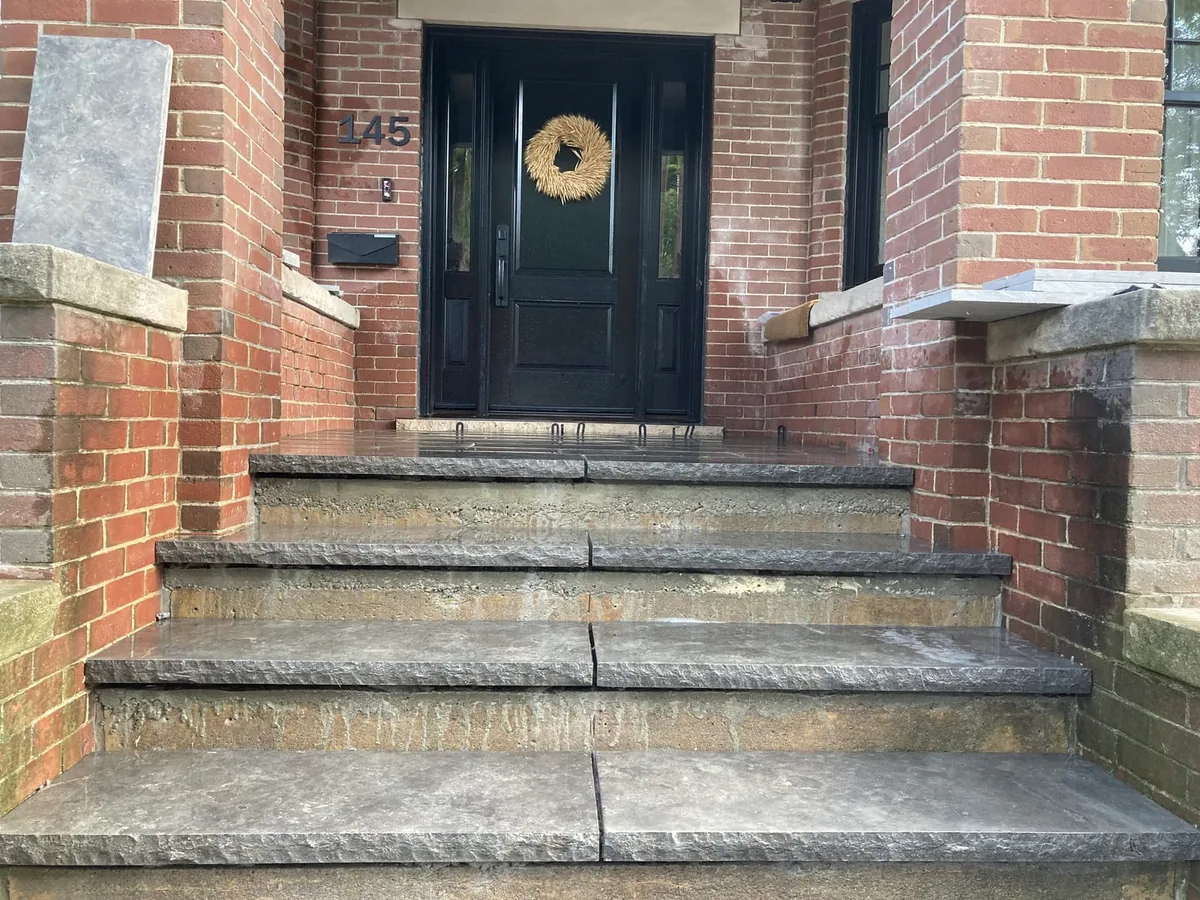
Designated, plaqued, rule-bound. The district decides what the street looks like, and our job is to match it exactly.
A real heritage designation applies here, not to be confused with the heritage-era homes elsewhere in the city.
Do I need approval in a Conservation District?
In almost all cases, yes. Inside either Heritage Conservation District, exterior work that touches a heritage attribute needs a Heritage Permit before it starts. This isn't a grey area for masonry specifically: brickwork alterations, and even painting a brick façade, are named permit triggers, not just structural changes. If the work genuinely isn't visible from the street or a public park, a lighter, delegated approval often applies instead of full committee review.
How long does the heritage permit process take?
The city has a statutory 90-day window to decide once an application is complete. Extending that window is usually the right call, since it's what lets staff ask for revisions instead of ruling on the first draft. None of this is a reason to delay a project; it's a reason to bring in someone who already knows the sequence.
Can you match brick that isn't made anymore?
Where original brick can't be sourced to match a Rosedale home's existing material, the work is a mix of sourcing and on-site recreation, not a strict either/or: we draw on the heritage brickmakers who still produce a discontinued clay brick where we can, and recreate it ourselves where we can't, most often as a dye-matched facing rather than a whole-brick remake.
Rosedale is two active Heritage Conservation Districts, South Rosedale, designated in 2002, and North Rosedale, designated in 2004, together one of the largest such pairings in the city, covering roughly eighteen hundred properties. Most homeowners meet that fact for the first time as an obstacle: a form, a waiting period, a process nobody explained clearly before the work started. We meet it differently. Permit literacy isn’t something we work around here; it’s a skill built over ten years of stone masonry inside these two districts, and we’d rather walk you through it before you start than have you learn it the hard way partway through.
Work that matches, not approximates
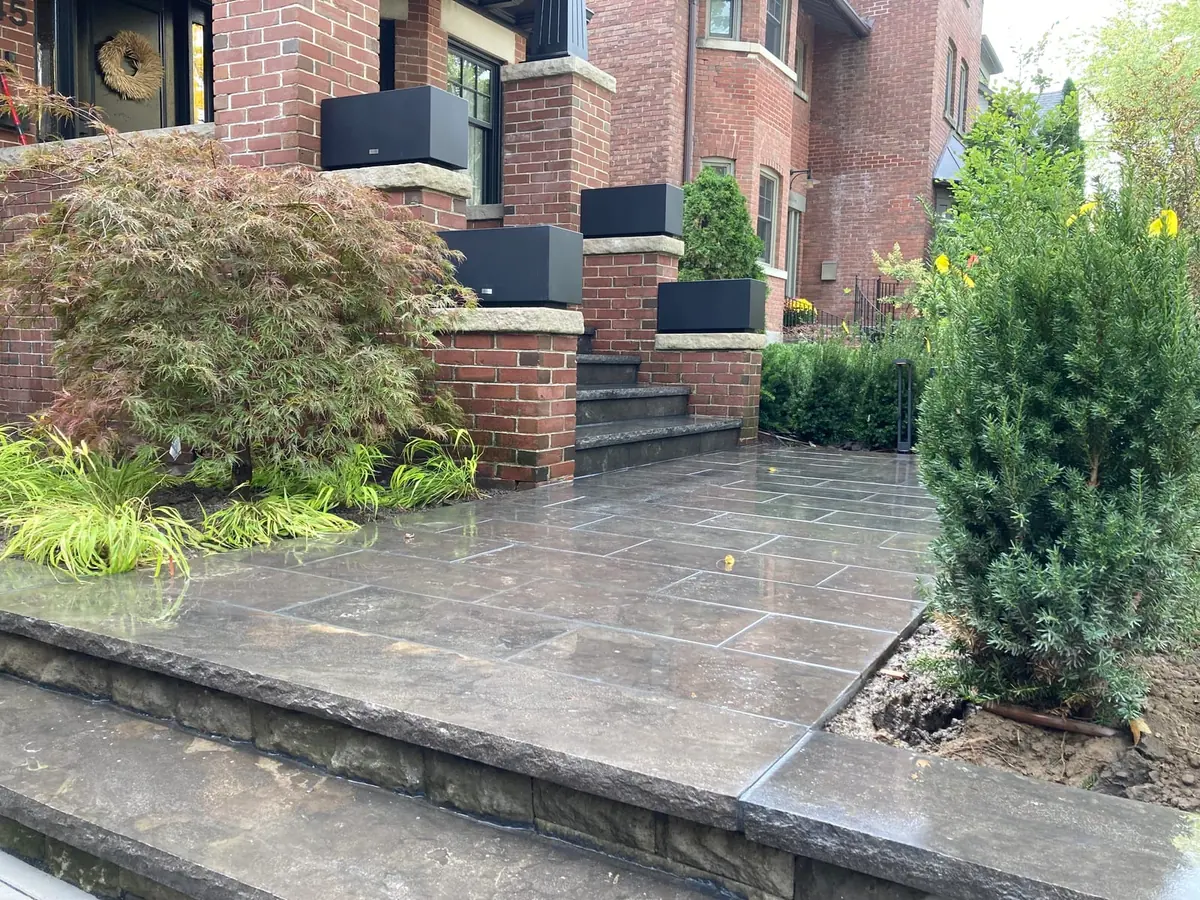
The permit process exists to protect what’s already there, and that’s the same standard we hold ourselves to on site. Where original brick can’t be sourced to match a Rosedale home’s existing material, the work is a mix of sourcing and on-site recreation, not a strict either/or: we draw on the heritage brickmakers who still produce a discontinued clay brick where we can, and recreate it ourselves where we can’t. In practice, that recreation is most often a dye-matched facing rather than a whole-brick remake: every brick in an old Rosedale wall already varies slightly from the one beside it, so matching a facing to that variation is closer to the real standard than an exact-copy one. Facings get built to honour the period look while meeting current structural code, which, not coincidentally, is exactly what a permit reviewer is checking for. On landmark and heritage-significant work, that same standard extends to stone: matched by hand-chiselling rather than swapped for a machine-cut replacement. The job is never standard, and in a district built on getting the details right, that’s the whole point.
Get in touch
If a Rosedale heritage permit is part of what’s holding your project back, that’s exactly the conversation we’re built for. Get in touch, and we’ll walk through what your project will actually need before a single brick moves.
Recent work